Happy Cat
I am not using it anyway
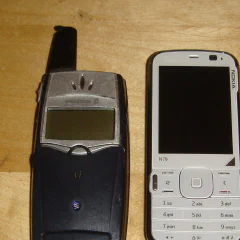
Recently I started using twitter, facebook and blogs more and I got a little bit annoyed that I couldn’t update those sites with my mobile phone. And then my digital camera died on me, which resulted in no new photos by me in the last couple of months. The final point which made me want to get a new fancy phone was me getting lost on Tibidabo without a GPS. My old phone is a Ericsson t39m, which is one of the best mobile phones ever made. It was one of the first phones with bluetooth and does stuff like email, WAP & T9. It also supports lots of accessories, like different sized batteries, different antennas, docks and travel chargers. It also pretty small and has a nice monochrome screen. But there comes a point where you need a new toy and after looking at all kind of phones I finally came up with a list of requirements: 3.5 mm headphone jackdigital camera > 3MGPSsmall and lightnot too expensive, because it might get stolen here in Barcelonanormal phone keys, no touch phonesome way to program for it WLANbluetoothUSB storage support for photos and music This ruled out pretty much most of the phones including the iPhone, which was out of the question anyway, because my recent experience with iPods and Linux. At one point I discovered the Nokia N79 Active, which was announced beginning of the year. It also has one nice additional feature which is was the real selling point for me: it comes with a Polar heart-rate belt. Buying one turned out to be a bit more difficult then I hoped. First it was just released in Finland, Sweden and South Africa, and not available on-line. It was announced in Germany, but the date got pushed back every month until they finally took it off their website. Then it got released in the UK and was available on the Nokia on-line shop, but they obviously don’t deliver to Spain. Finally a friend of mine in the UK ordered it for me and forwarded it to Barcelona. Now I have it since a little bit over a month and are fairly happy with it. I use it every day as my phone, for photos, web browsing and twittering. Together with the Nokia Sportstracker website and software it is also brilliant to track your sports activity, which is in my case mainly cycling and mountain biking. Here is the information about my last long ride on Tibidabo: 4h on Tibidabo Here are some other things I like about it: pretty light and small for a smart phonesome good software available, like GPS tracking (AFTrack), twittering (Gravity), Puttythere is a Python version for itsome nice google stuff, like Maps, Latitude, Youtube, …good Nokia mapping softwarethe podcasting client is nice and you can add your own OPML files as directoriescontacts & calendar can sync with googlecamera is good enough And some stuff that is rubbish the software and menus are structured very strange, you can reorder them but some stuff just makes no sense at all. The worst bits are all the different settings and preferences. Others think so too there is a “Media” button & menu, which doesn’t make any sense the whole Sportstracker thing seems to have a unsure future the WLAN and 3G selection should just do the right thing, like the iPhone doessome non-Nokia software has a completely different UI, the google apps and opera for exampleOVI (Nokia online services and app store) is a messit crashes sometimes, even doing simple stuffout of the box it comes with three different types of maps (google, OVI, Sportstracker)annoying start-up screen & sound and horrible ring tones Overall I am happy though, because I had rather low expectations as most mobile phones I had in my hand in the last couple of years were pretty rubbish. Except of the iPhone, which had the first good user interface for phones since the rotary dial, but it just was not right for me.
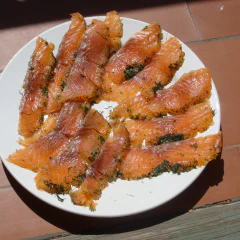
Simple gravlax recipe: two pieces of salmon with skin ondill (handful) sea salt (two tablespoon) crushed pepper corns (two tablespoon) sugar (one tablespoon) cut dill, mix with salt and pepper. Put one piece of salmon skin down on large bit of cling-film. cover with the mix, put other salmon on top. wrap everything tight in cling-film. Off into the fridge and put something on top to weight it down. Now the difficult bit: you have to wait at least one, better two days and turn it every once in a while. Nice and easy snack for the summer.
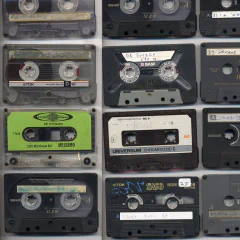
Today I finally finished digitizing all of my techno and house cassette tapes. It took me a little bit over two months. Here are some statistics: 290 “a” sides278 “b” sides (sometimes the tapes broke after the first side)12 tapes which unusable41 tapes which turned out to be copies of CDs which are available to buy5 tapes were copies of stuff I have also on CDs which are not available to buy8 tapes had unreadable labels 249 GB in 16 bit 48khz WAVE filesthe whole list I probably still have some tapes flying around somewhere and my girlfriend also has some, but the vast majority of my music is digitized now. The music is mainly mixed techno and house DJ sets, from my friends like DJ Gomez, Motik and Nitin. A lot of sets are recorded from radio like HR3/HRXXL and Hithouse Stuttgart and in clubs around Stuttgart and Cologne. The most popular DJs are Sven Vaeth, Roland Casper, Richie Hawtin, DJ Hello, Dag, and Laurent Garnier. I used my little python tapetransfer script, which I wrote for this purpose. It basically waits until there is music and then records until there is a longer break, which is perfect for DJ mixes and rubbish for normal music CDs. I recorded everything with the same level, which means that some tapes are really quite now, but the alternative would have been to play every tape twice. If it turns out that some tapes are too quite I will record them again in 32bit and normalize. I probably write another script to find out the level of each wav file. In the end it didn’t take me as long as I expected, I usually managed to do one tape before work and maybe three in the evening and a bit more on the weekend. All that is left now is converting them to flac and mp3. The files have to be tagged and named more consistent. Another idea is to also scan pictures of all the tapes and add this to the music files. And listening to all of them again, but I already found some real gems.